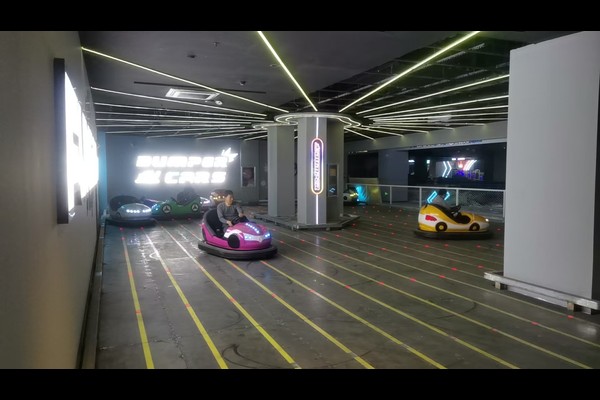
An indoor bumper car arena is a logistics project disguised as a ride: the floor, the ceiling grid, the fleet and the session clock all have to agree.
This project shows the sequence that keeps an arena build predictable, from floor survey to the first paying session.
Key Specifications
| Item | Reference |
|---|---|
| Genus Project | Indoor bumper car arena |
| Tabulatum | Conductive or grid floor per system |
| Ceiling | Charging grid sized to the arena |
| Classis | Calculated from arena area and session time |
| Operatio | Timed sessions with ticket control |
| Subsidium | Wiring diagrams, spares and training |
Omnes figurae valores referuntur et confirmantur in propositione machinali pro situ tuo. An electric fleet depends on battery management as much as on the cars themselves. See electric battery for background.
Floor and Ceiling Requirements
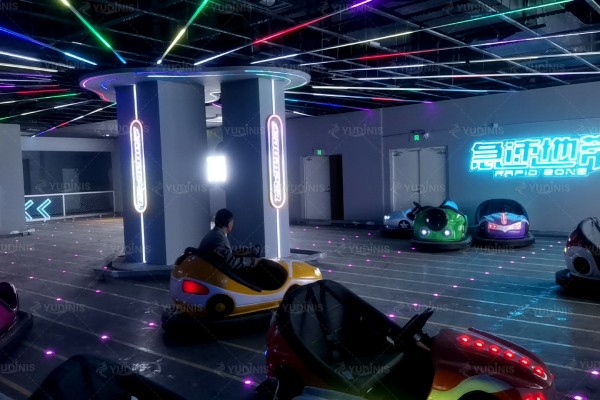
The arena needs a level, sealed floor and a ceiling grid at a consistent height, because both are part of the power system. Before anything is installed, the floor is surveyed for level and finish, and the grid height is verified against the car collector design. Those two measurements decide the system type as much as the budget does.
Sizing the Fleet
Fleet size follows from arena area, session length and how fast guests can be cycled through the gate. Too many cars and half stand idle during charging, too few and the queue kills the atmosphere. On this project the fleet was matched to a session of a few minutes with a short changeover, and one staff member controls entry while another watches the arena.
Session Operation and Pricing
Bumper car arenas sell time rather than rides, so the ticket model is simple: a session of a fixed length, with a wristband or card system controlling entry. Posting session times where waiting guests can see them keeps the queue calm, and it also lets staff plan cleaning and battery rotation between sessions.
Maintenance That Keeps the Arena Full
Daily checks cover tyres, steering, seat belts and collector poles, because those are the parts that fail first. Tyre and wheel condition decides both safety and the quality of the collision, so wheels are inspected weekly and replaced in sets. Operators adding a second attraction later often pair the arena with a battery bumper cars for parks fleet to serve a different age group on the same floor.
Quid potes Taillour
Aliquam tegit partes convivae actu animadverto: Arena theming, body design, lucendi, sound and payment system.
The manufacturer here is the factory itself: design, steelwork, corona, assembly and testing all happen inside a 125,000-square-metre production base, and every unit is run under load before it is packed. Indoor officinae navem cum pavimento loading et laquearia alvi compescit, quia duo numeri constitui possunt quid statuatur.
Send the floor plan and ceiling height – we will return a zoning drawing with capacity, equipment list and pricing.