Zipline Ride Specifications
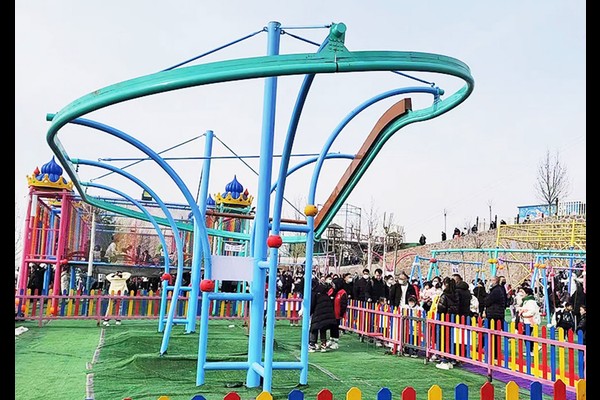
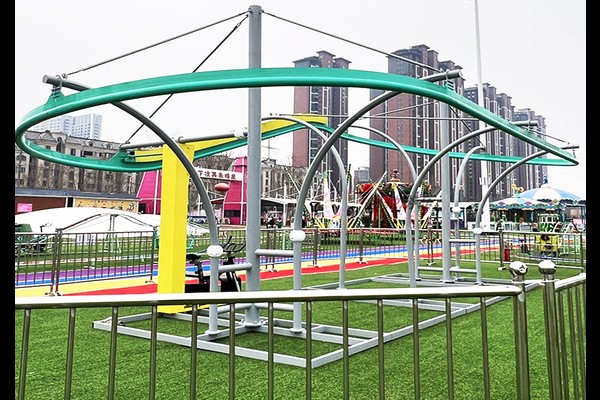
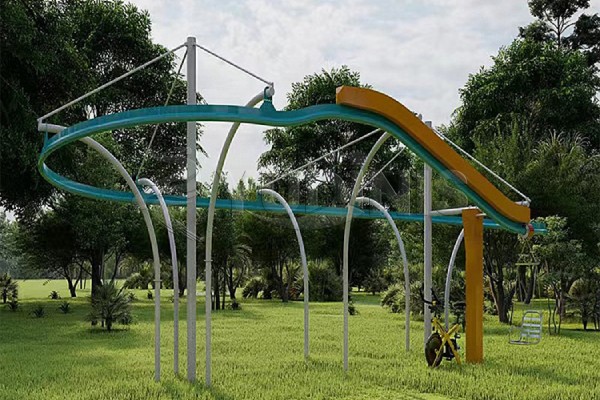
Guests ride a trolley along a steel rail or cable, using gravity for propulsion, so the attraction needs no motor and no power supply along the line itself. The route can be straight or curved, single or multi lane, and the length and elevation drop are matched to the available site. Loading is controlled by an attendant who checks the harness, connects the trolley and releases each guest in turn.
Why Gravity Rides Cut Operating Cost
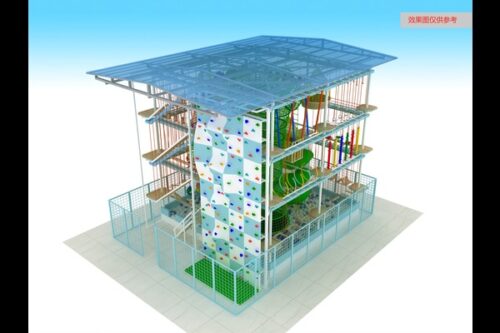
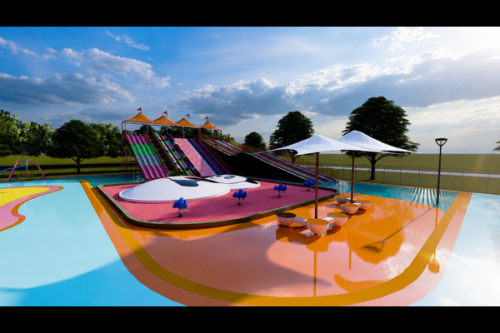
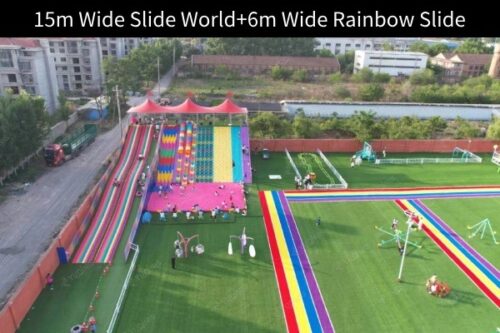
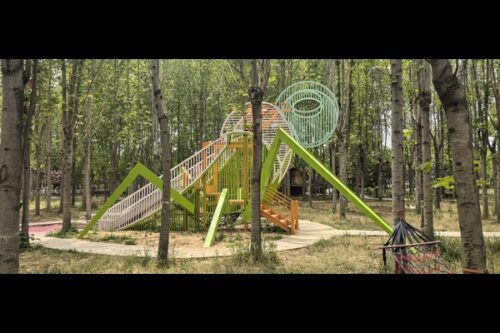
A mechanical ride consumes power on every cycle and wears a drive system. A gravity attraction consumes nothing between inspections and can run all day with one attendant. Operators building a non-powered offer around climbing and rainbow slide playground attractions usually find the zipline becomes the highest-throughput item in the zone, because it moves guests continuously.
Route Planning, Height and Landing Zone
The landing zone is the part most often underestimated. It needs enough run out to stop the trolley safely, braking that engages before the platform, and a clear approach so the next guest does not step into the path. Tower height, rail slope and braking distance must be calculated together, and the route should avoid crosswinds and any area shared with other attractions.
Harness Checks and Daily Inspections
Safety depends on one person doing one job consistently: attending the harness. Inspect steel wire rope or rail for wear, check trolley wheels and brake blocks, verify harness stitching and connectors, and confirm the landing brake engages before the platform. Log every check, because a written record is what keeps a zipline operating safely for years.