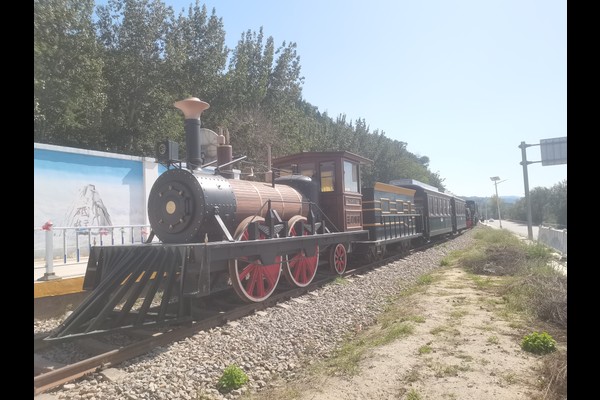
A trackless train moves guests across a site that has no rails and never will – which makes it the cheapest way to solve circulation in a large park.
This project shows how the train becomes the transport spine of a site rather than simply another attraction.
Sleutel spesifikasies
| Item | Verwysing |
|---|---|
| Projek tipe | Trackless tourist train |
| Route | Paved loop with boarding stations |
| Kapasiteit | Multi carriage configuration |
| Krag | Diesel or electric per site |
| Operasie | Continuous service on a fixed loop |
| Steunstuk | Driver training and service schedule |
Alle syfers is verwysingswaardes en word bevestig in die ingenieursvoorstel vir jou webwerf. Diesel and electric versions suit different sites, depending on engine characteristics and duty cycle. See diesel engine for background.
Route Planning and Stations
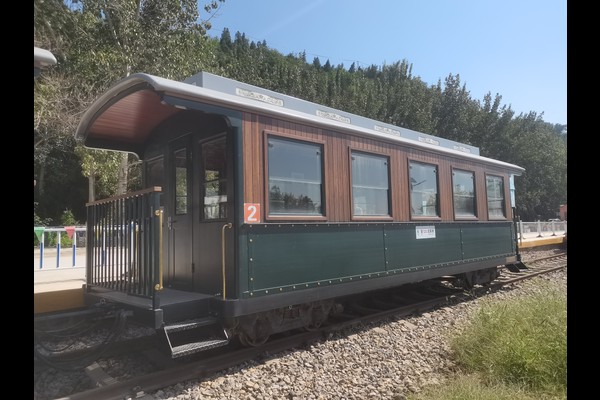
The route is planned like a transport line: wide enough for the carriages to pass safely, avoiding steep gradients, and with boarding points where guests naturally arrive. Stations were placed at the entrance, the middle of the park and the far end, so the train reduces walking distance instead of adding a tour. Clear signage and a fixed timetable keep the service predictable.
Choosing the Configuration
Carriage count follows the peak flow between stations, and the length of the train has to suit the tightest corner on the route. Diesel and electric versions each suit different sites: electric trains suit indoor or enclosed areas and quieter zones, while diesel suits long outdoor loops. Ons 70 seats trackless tourist train is the configuration used on this project.
Driver Training and Guest Safety
Drivers are trained on the actual route: speed limits at corners, stopping positions at stations, boarding rules and what to do if a guest stands up. Each station needs an attendant during peak hours to control boarding and keep the path clear. Written boarding and alighting rules protect both the service and the park.
Servicing a Working Vehicle
A train works every day, so servicing is scheduled rather than reactive: daily checks on brakes, tyres, lights and coupling joins, weekly inspection of the drive and steering, and a monthly review of the chassis. Keeping a spare wheel set, brake pads and lamps on site means the train stays in service instead of becoming a parked attraction.
Wat jy kan pasmaak
Die volgende besonderhede pas by jou park: Route layout, carriage design, kapasiteit, power type and livery.
Ons haal aan as die direkte toerusting vervaardiger van a 125,000 vkm produksie basis, dus gebeur die tegniese gesprek en die kommersiële een op dieselfde plek, met 20 jare se uitvoerprojekte agter die antwoord. Projekwerk sluit uitlegtekeninge in, gefaseerde toerustinglyste en dokumentasie wat u direk aan 'n plaaslike kontrakteur kan oorhandig.
Send your plot plan, budget range and target opening date – we will return a phased proposal you can take straight to your board.