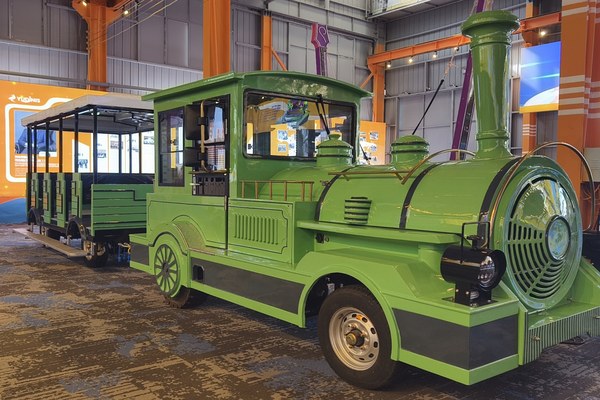
Un train sans rail transporte les visiteurs sur un site qui n'a pas de rails et n'en aura jamais. – ce qui en fait le moyen le moins coûteux de résoudre la circulation dans un grand parc.
Ce projet montre comment le train devient l'épine dorsale du transport d'un site plutôt que simplement une autre attraction.
Spécifications clés
| Article | Référence |
|---|---|
| Type de projet | Train touristique sans rail |
| Itinéraire | Boucle pavée avec stations d'embarquement |
| Capacité | Configuration multi-chariots |
| Pouvoir | Diesel ou électrique par emplacement |
| Opération | Service continu sur boucle fixe |
| Soutien | Programme de formation des conducteurs et d'entretien |
Tous les chiffres sont des valeurs de référence et sont confirmés dans la proposition d'ingénierie de votre site. Les versions diesel et électrique conviennent à différents sites, en fonction des caractéristiques du moteur et du cycle de service. Voir moteur diesel pour le fond.
Planification d'itinéraire et gares
Le parcours est planifié comme une ligne de transport: suffisamment large pour que les voitures puissent passer en toute sécurité, éviter les pentes raides, et avec des points d'embarquement où les invités arrivent naturellement. Des gares ont été placées à l'entrée, le milieu du parc et l'extrémité, le train réduit donc la distance de marche au lieu d'ajouter une visite. Une signalisation claire et un horaire fixe assurent la prévisibilité du service.
Choisir la configuration
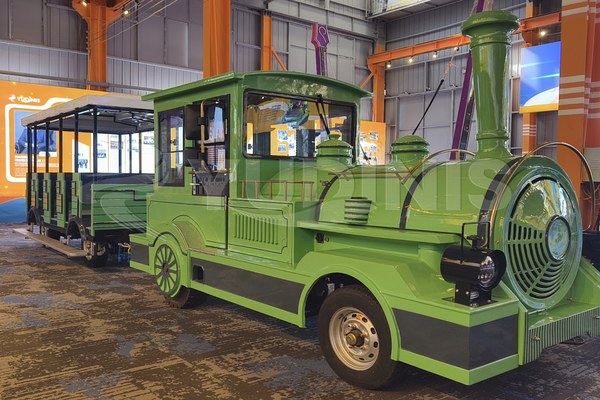
Le nombre de wagons suit le débit de pointe entre les stations, et la longueur du train doit être adaptée au virage le plus étroit du parcours. Les versions diesel et électrique conviennent chacune à différents sites: les trains électriques conviennent aux espaces intérieurs ou clos et aux zones plus calmes, tandis que le diesel convient aux longues boucles en extérieur. Notre 70 sièges train touristique sans rail est la configuration utilisée sur ce projet.
Formation des conducteurs et sécurité des invités
Les chauffeurs sont formés sur l'itinéraire réel: limites de vitesse dans les virages, points d'arrêt dans les gares, règles d'embarquement et que faire si un invité se lève. Chaque gare a besoin d'un accompagnateur pendant les heures de pointe pour contrôler l'embarquement et garder le chemin dégagé. Des règles écrites d'embarquement et de descente protègent à la fois le service et le parc..
Entretien d'un véhicule en état de marche
Un train circule tous les jours, la maintenance est donc planifiée plutôt que réactive: contrôles quotidiens des freins, pneus, lumières et raccords d'accouplement, inspection hebdomadaire de la transmission et de la direction, et une revue mensuelle du châssis. Conserver un jeu de roues de secours, les plaquettes de frein et les lampes sur place permettent au train de rester en service au lieu de devenir une attraction stationnée.
Ce que vous pouvez personnaliser
Les détails suivants correspondent à votre parc: Disposition de l'itinéraire, conception du chariot, capacité, type de puissance et livrée.
Nous citons comme direct fabricant d'équipement d'un 125,000 base de production en m², donc la conversation technique et la conversation commerciale se déroulent au même endroit, avec 20 des années de projets d’exportation derrière la réponse. Le travail du projet comprend des dessins d'implantation, des listes d'équipements et une documentation progressives que vous pouvez remettre directement à un entrepreneur local.
Envoyez votre plan de terrain, fourchette budgétaire et date d’ouverture cible – nous vous renverrons une proposition progressive que vous pourrez soumettre directement à votre conseil d'administration.